According to IATA, aviation cyberattacks surged an estimated 600% in 2025 compared to 2024. Every reservation system, every check in platform, every passenger database is now a live target. And the attackers are getting faster.
Why Airlines Keep Getting Hit
Airlines are not random targets. They are chosen ones.
They hold passport details, payment records, frequent flyer credentials, and real time operational data. They cannot afford downtime. A system that goes offline at peak hour does not just inconvenience passengers. It triggers cascading failures across every connected vendor and airport.
That pressure is the weapon. Attackers know airlines will pay quickly to stay operational.
The Four Threats Doing the Most Damage
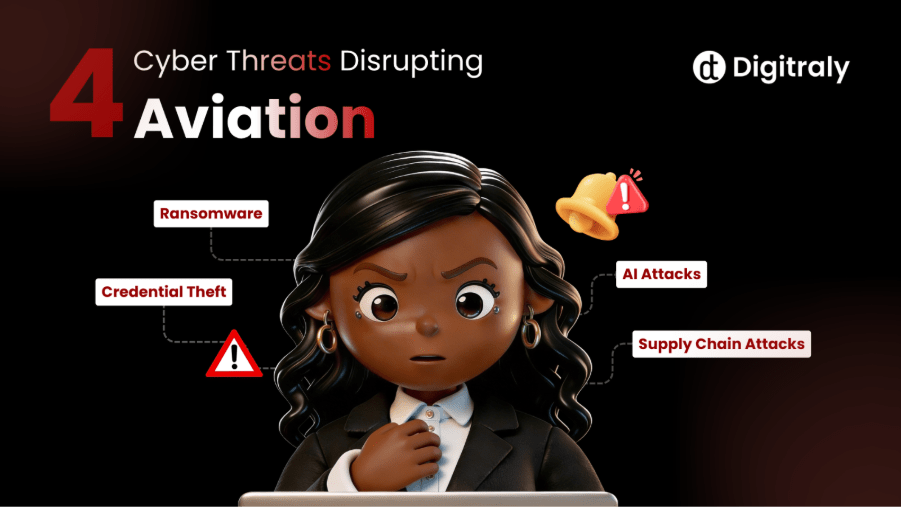
#1 Ransomware
Attackers encrypt reservation platforms, check in systems and baggage software then demand payment to restore them. One hour of peak time downtime at a major hub cost approximately one million dollars. Some carriers have been forced to cancel over 1,200 flights from a single attack.
The ransom is only the beginning. Recovery costs, regulatory fines and reputational damage all compound fast. Most entry points are entirely preventable. Weak endpoints, unpatched systems and untested vendor access are where attackers consistently get in.
Running a structured penetration test against your real infrastructure before an attacker does is where genuine protection starts.
#2 Supply Chain Attacks
Attackers have learned something important : “Airlines share vendors”. Compromise one platform and you reach every operator connected to it.
A single breach in a shared technology provider does not stay contained. It moves across every airline, every airport, and every system that trusts that vendor. IATA has flagged this as one of the most operationally damaging attack patterns in aviation today.
Most airline vendor contracts carry no specific cybersecurity accountability clauses. Understanding which testing type applies to third party ecosystems is where that accountability starts.
#3 Credential Theft
Most of the aviation cyberattacks begin with a stolen password or an unauthorised login. Not sophisticated code. Just a credential that should not have worked.
AI generated phishing emails now replicate internal airline communications convincingly enough to pass casual scrutiny. Voice phishing impersonating IT helpdesk teams extracts MFA codes in real time. Staff are being socially engineered faster than traditional awareness training can adapt.
The real fix is architectural. Adopting passwordless FIDO2 authentication with biometrics means there is no credential to steal in the first place. No password means no door to walk through.
#4 AI Attacks
Attackers are using AI to generate convincing communications, probe networks faster, and adapt inside compromised systems in real time. This is not a future risk. It is active right now.
Airlines deploying AI on the defensive side gain real time anomaly detection, automated response, and faster containment. Those that have not are fighting a faster adversary with slower tools.
What Resilience Actually Looks Like
Four things separate resilient airlines from vulnerable ones. Controls that are actively tested, not just documented. Real time monitoring that alerts at the moment of intrusion. Backup systems drilled before an incident, not scrambled during one. Threat intelligence that reads industry wide patterns, not just internal logs.

Most airlines know gaps exist. The challenge is knowing which one’s matter most before an attacker finds them first. Digitraly works with airlines and enterprise teams on full security assessments.
These assessments cover penetration testing, application security, SIEM setup and compliance readiness. They align with EASA, FAA, and ICAO frameworks, depending on country-specific compliance requirements.