
In fact, IBM’s Cost of a Data Breach Report 2025 found that 97% of organisations reporting an AI-related security incident lacked proper AI access controls. That’s not simply a technical vulnerability. It reflects how many businesses are operating with security measures that no longer match the sophistication of modern threats.
The challenge for most organisations isn’t a lack of investment in security. It’s the assumption that existing protections are enough to prevent today’s attacks.
Why “Good Enough” Security Fails Modern Businesses
What if your business is already exposed in ways that are difficult to see day to day?
Most modern attacks do not start with obvious failures. They begin quietly, often in systems that were trusted and assumed to be secure.
In many cases, risk builds up in familiar places:
- Web applications with logic flaws attackers exploit silently
- APIs left unauthenticated or over-permissioned
- Cloud environments misconfigured during rapid scaling
- Employees clicking phishing links that bypass filters
What a Real Security Programme Actually Looks Like
Security is more than a single product or a one-time audit. It is a layered programme where technical controls work in alignment with governance frameworks to provide continuous protection, visibility and resilience.
Web Application & API Security Testing
Evaluates your live systems the way an attacker would, identifying injection flaws, broken authentication and exposed endpoints before they can be exploited.
Cloud Security Assessments
Review your AWS, Azure or GCP environment to identify misconfigurations, excessive access permissions and unintended data exposure that can often go unnoticed until it is too late.
Vulnerability Assessments
Provide a continuous view of your security risks, helping you understand what is exposed today rather than relying on outdated snapshots that no longer reflect your current environment.
Phishing Simulations
Train your people to recognise and respond to real-world attacks. Since human error remains one of the most common causes of breaches, regular phishing simulations help employees identify threats before they cause damage and strengthen overall security awareness over time.
Security Architecture Reviews
Ensure your infrastructure is built with security in mind from the start, rather than relying on fixes and patches after issues emerge.
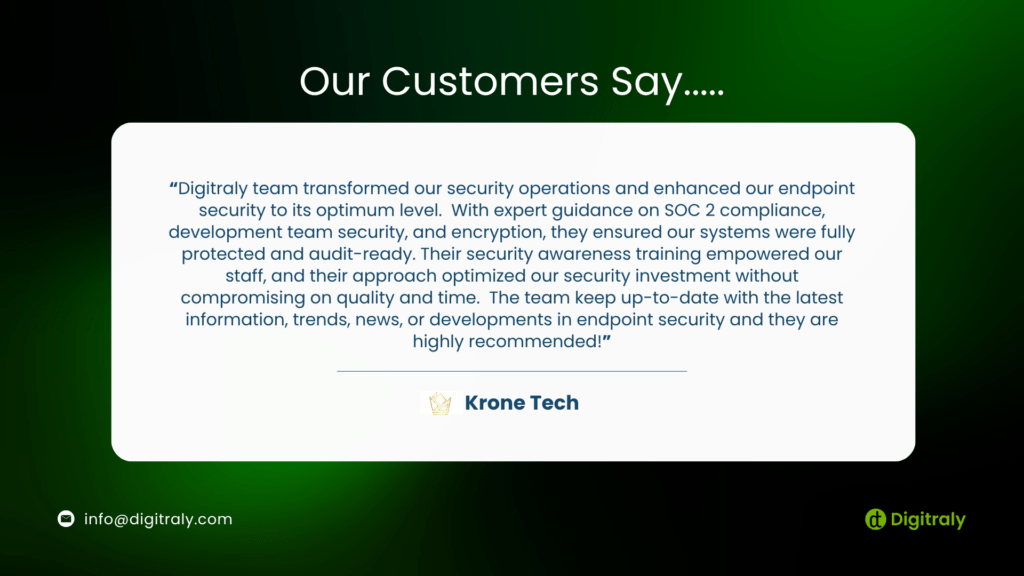
What Our Customers Say About Digitraly
Compliance Is a Business Advantage!
Frameworks such as PCI DSS, ISO 27001, and SOC 2 exist because security now requires clear, verifiable evidence. Regulators and enterprise buyers expect proof that controls are implemented and operating effectively.
- PCI DSS is essential for any organisation handling card payments
- ISO 27001 sets the global standard for information security management systems
- SOC 2 is increasingly a baseline requirement for enterprise SaaS partnerships
When implemented effectively, compliance strengthens trust, accelerates enterprise sales cycles, and often becomes a key factor in winning enterprise customers.
For organisations without a dedicated in-house security team, Managed Security Services provide continuous protection through 24/7 monitoring, threat detection, and incident response, removing the need to build and maintain a full internal SOC.
The Real Cost of Waiting
Every day without visibility creates an opportunity for attackers to move unnoticed within your environment. The fastest recoveries are rarely driven by budget. They come from organisations that identified and addressed security gaps before they were exploited.
Time To Work Before Sink
Digitraly helps organisations identify and close security gaps through penetration testing, compliance support, and managed security services. Start with a free security audit to uncover your key risks and get clear next steps.
Get Clarity on Your Real Security Posture with Digitraly