The Transition from Monolithic to Modular Systems
Airline booking systems were monolithic for decades—large, rigid structures where everything was bundled together. Modifying even one part meant a costly, time-consuming overhaul.
Modular technology changes that. Instead of one inflexible system, airlines can now introduce independent modules, each performing a specific function such as:
- Seat selection
- Ancillary purchases (extra baggage, in-flight meals, Wi-Fi)
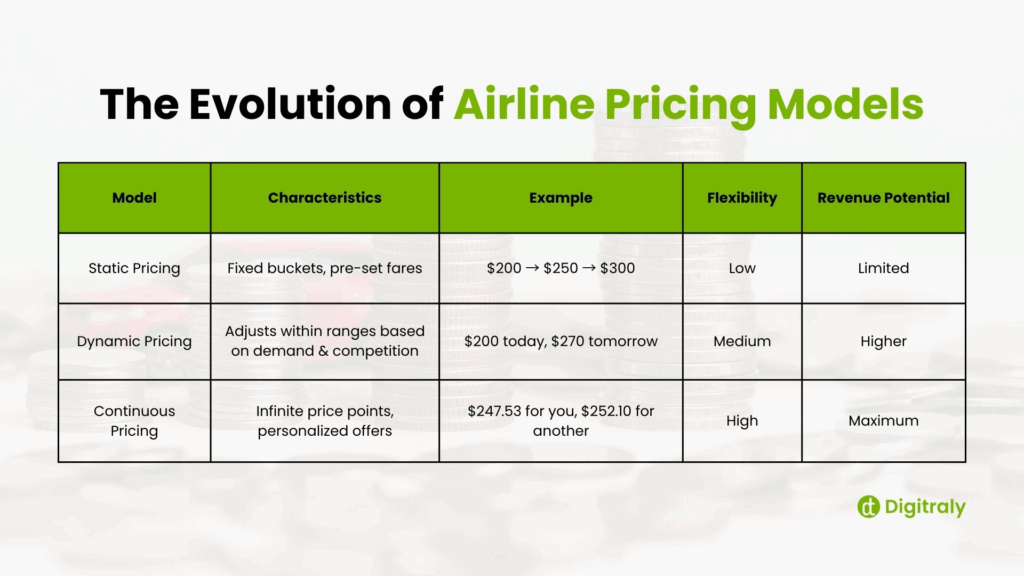
- Pricing engines (static, dynamic, or continuous) to determine fares
- Loyalty program management
For example, airlines that once relied only on static pricing (fixed fare buckets) can now plug in a dynamic pricing module to adjust fares in line with demand, or upgrade to a continuous pricing engine that offers virtually unlimited, personalized price points.
Because each module communicates seamlessly with the others, airlines can update or replace parts without disrupting the entire system. The result is faster innovation, lower costs, and more agile customer experiences.
Personalization at Scale
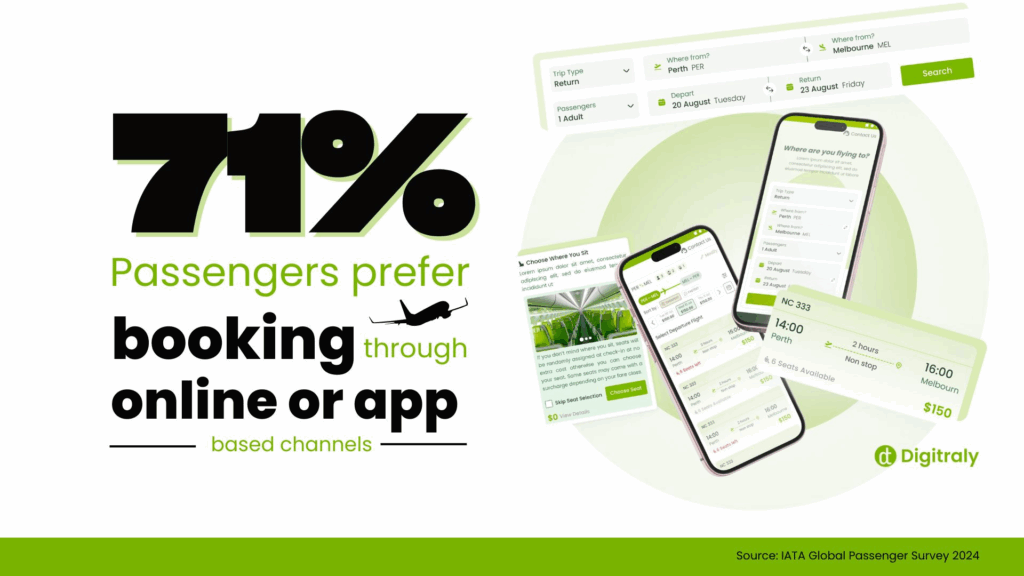
Travelers no longer want one-size-fits-all bookings. They expect experiences tailored to their needs and modular booking platforms make this possible. Today, digital has become the default: 71% of passengers prefer booking through online or app-based channels, and more than half (53%) choose an airline’s own digital platforms.
With data-driven insights, airlines can:
- Offer customized seat upgrade opportunities
- Recommend suitable add-ons, such as lounge access or priority boarding.
- Incorporate loyalty points as part of the booking process.
- Price is live and dynamically responsive to demand.
This level of customization can only be achieved as modular systems can feed information from various sources and respond dynamically. Booking has become a dynamic, interactive process between passenger and airline instead of a static transaction.
Speed and Efficiency in Booking Processes
Modular systems are not just about flexibility – they also maximize operations. With APIs (Application Programming Interfaces) making it possible for one module to communicate with another, airlines can quickly:
- Roll out new features without disruption
- Inject third-party services (e.g., hotel or car rentals)
- Streamline backend tasks like payment processing and fraud detection.
For customers, booking times are easier, errors are reduced, and payment processing is streamlined. For airlines, it is lower maintenance costs and more responsiveness to shifting market demand.
Enabling Ancillary Revenue Growth
Ancillary revenue—anything other than ticket price—is now the linchpin of airline profitability. Modular booking systems provide a seamless way for airlines to offer, sell, and bundle these services.
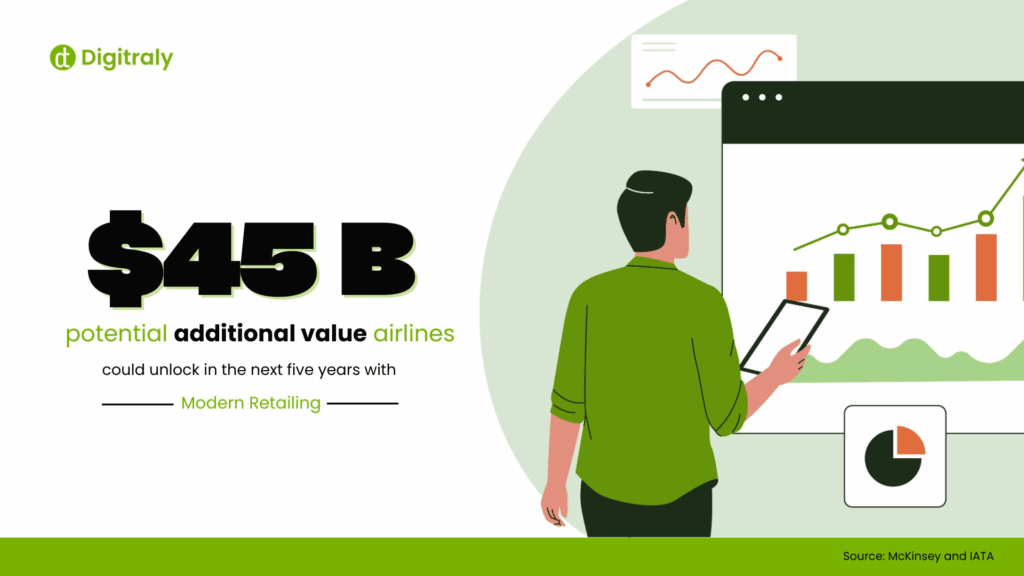
By adopting such modern retailing approaches, airlines could unlock up to $45 billion USD in additional value over the next five years, according to IATA and McKinsey (2024). New Offers alone represent more than $13 billion USD in potential revenue, while insights from Shopping Data help airlines optimize pricing and target demand.
For individual airlines, this translates into a potential revenue uplift of 2–3%, or up to 15% of EBITDA. Transform bookings and grow ancillary revenue with AI-powered insights and modern online booking solutions – Contact Digitraly Now!
Customer Control and Transparency
Travelers want more control over their bookings, and modularity delivers exactly that. Instead of being constrained by rigid booking workflows, customers can:
- Modify individual parts of their trip without having to start over
- View live availability and prices.
- Self-service cancellations, upgrades, or re-bookings
This open book approach encourages confidence and boosts customer satisfaction—two key drivers in an extremely competitive landscape.
Integration with Modern Distribution Channels
Airline profitability today is driven not only by ticket sales but increasingly by ancillary revenue. Modular booking systems make it easy to offer bundles, add-ons, and targeted upsells.
AI-powered prediction models amplify this by:
- Identifying which products a traveler is most likely to buy
- Timing offers for maximum conversion
- Personalizing bundles based on behavior and history
This means smarter offers, higher uptake, and more profitable bookings—without disrupting the overall system.
Future-Proofing for Innovations
Airline booking reservations are not just about what’s needed today—it’s also about future-readiness. Modularity is designed to be scalable, enabling emerging technologies like:
- AI-powered chatbots for automated customer care
- Blockchain for secure ticketing and identity verification
- Biometric systems to enhance check-ins and boarding efficiency
- IoT connectivity to provide personalized in-flight experiences
By adopting modular technology, airlines can future-proof their operations to evolve and adapt to changing customer requirements and advancements in technology.
Overcoming Challenges to Adoption
Of course, the shift to modular systems presents challenges. Airlines must overcome:
- High initial investment cost
- Complexity in integrating with legacy systems
- Cybersecurity across multiple modules
- Training staff to manage new technologies
But in the long run, efficiency, customer satisfaction, and increased revenues are worth the short-term grumbles. Airlines that move now are leaders in an increasingly digital world.
Wrap Up
The airline booking industry is undergoing a profound transformation, with modular technology at its core. By breaking free from rigid monolithic systems, airlines can now deliver more personalized, efficient, and profitable booking experiences. For travelers, this means greater choice, smoother journeys, and more transparency than ever before. For airlines, it means adaptability, growth, and future readiness in a competitive global market.
Driving this shift is the need for innovation and agility—qualities that modular systems inherently provide. Airlines adopting this technology are not merely upgrading their systems; they are reshaping how the world books and experiences air travel.
Looking to harness modular technology for your airline solutions?
Digitraly is here to help you build smarter, scalable, and future-ready booking systems tailored to your unique business goals.