
Each Layer Answers a Different Question
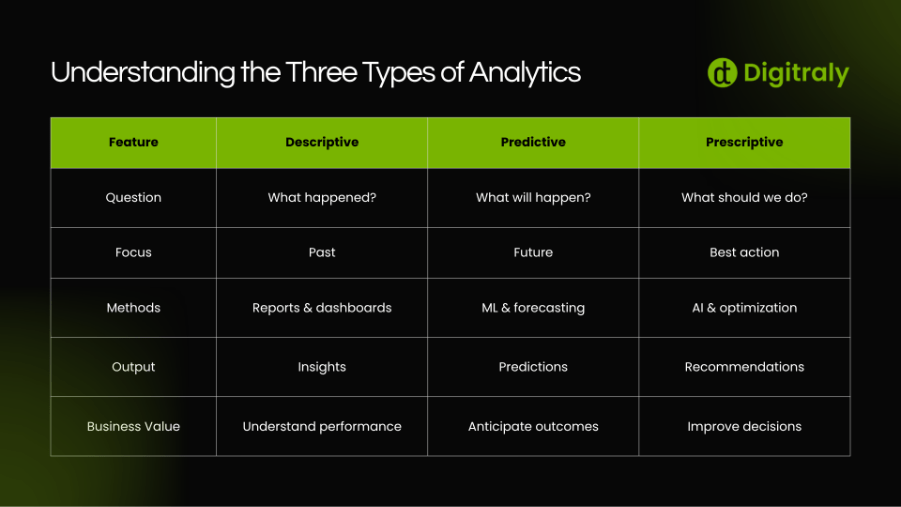
Descriptive analytics tells you what happened. Predictive analytics tells you what is likely to happen next. Prescriptive analytics tells you what to do about it. Together they form a maturity path that moves an organization from hindsight to foresight.
What Descriptive Analytics Reveals
Descriptive analytics is the foundation. It organizes historical data into dashboards, reports and summaries that explain performance. An airline reviewing which in flight movies passengers watch most, or a fintech firm tracking monthly transaction volume, is practicing descriptive analytics.
This stage answers questions such as which routes ran late last quarter or which customer segment generated the most revenue. It builds the baseline every later stage depends on. Without accurate descriptive reporting, predictive and prescriptive models have nothing reliable to learn from.
Most organizations already operate here through business intelligence tools. The gap opens when teams stop at description and never ask what the numbers mean for tomorrow.
Where Predictive Analytics Creates Advantage
Predictive analytics applies statistical models and machine learning to historical patterns so a business can anticipate outcomes. In aviation this often means forecasting mechanical issues, delays or demand shifts before they occur.
Predictive models now support maintenance planning, crew fatigue management and fraud detection in fintech. They shift teams from reacting to problems toward preparing for them, which reduces cost and protects customer trust.
How Prescriptive Analytics Turns Insight into Action
Prescriptive analytics goes a step further. Instead of forecasting an outcome, it recommends the best response among several options, often running the calculation continuously as conditions change.
Dynamic ticket pricing is a clear illustration. Airlines adjust fares in real time based on demand, weather and competitor rates, while platforms such as FLYR use prescriptive models to predict fares and let travelers lock in low prices before they rise.
Maintenance teams use the same logic. A prescriptive system moves beyond flagging a part likely to fail. It recommends when to replace it, which technician to assign and how to sequence the repair to minimize aircraft downtime. Research on airline baggage handling shows similar integrated models combining all three analytics layers to recommend the most efficient handling process .
Moving From Description to Decision
None of these stages work well in isolation. Descriptive data trains predictive models and predictive forecasts feed prescriptive recommendations. Turkish Airlines documented this exact progression, moving from basic reporting toward a fully prescriptive operations model over several years and the case shows the shift is gradual rather than immediate.
Leaders who treat analytics as one continuous pipeline, rather than three separate projects, see faster returns. The goal is not more dashboards alone. It is a system where every report eventually points to a recommended action.
Make Better Decisions with an AI Decision Support System
An AI Decision Support System (AI DSS) combines descriptive, predictive and prescriptive analytics into one platform, helping your team move from insights to action. Optimize pricing, streamline operations, reduce downtime and respond faster with AI-driven recommendations that improve business outcomes.
Ready to make smarter decisions with AI?
Discover how an AI DSS can transform your operations.